Anova Health Institute

admin_Anova

TB & COVID-19, what you need to know

In June 2020, the Western Cape health department released data stating that people with TB have a two to three-fold increased risk of dying of COVID-19.  The department also found that just over half of COVID-19 deaths were due to diabetes. In contrast, about one in 10 fatalities from the new coronavirus were due to being HIV positive and 2% were due to having active TB.   So what does this mean for you if you have TB? We sat down with Dr Bongile Mabilane, QI Lead for Anova and Public health practitioner to talk about what impact COVID-19 has on people with TB.   In simple terms, what is TB?  TB stands for Tuberculosis. An infection caused by a resilient bacteria called Mycobacterium Tuberculosis. This bacteria is a rod-shaped organism that can live in harsh exterior conditions. Once a person gets infected by this bacteria, they can either present with ‘Active TB Disease’ or they may have ‘Latent TB’. Both of these issues/presentations need medical treatment. Lastly, many people think that TB is only a problem to the lungs, but it can infect and stay almost anywhere in the body (a situation called Extrapulmonary TB)  What impact does COVID have on people who already have TB?  Studies conducted here in SA and other African settings are revealing that people with active TB or those that had TB just recently are in a higher state of risk to have the more severe types of COVID. This is because COVID infections tend to destroy the very lung pockets that TB also destroys. So if TB has already done some damage, the pathology turns for the worse when COVID comes in that very same person.  The best way to protect this from happening is to exercise all the stringiest measures against COVID, that is, wearing masks, washing hands properly and frequently as well as exercising social and physical distancing by staying home and leaving only if you have to. Prevention is key for these patients and if they do get COVID, early medical care is needed  Those with active TB disease need to be taking their treatments faithfully to avoid relapse or complications.   If someone who has TB catches COVID, are their recovery process different to someone who doesn’t have TB?  There are a lot of studies going on to test how different this could be. This is partly also determined by our limited knowledge of the various strengths and strains of COVID circulating in our society at the moment.   The recovery process is expected to be the same if its mild COVID but might be strained and delayed if a TB patient gets the severe forms of COVID.     Some research shows that people with an underlying illness are at a higher death risk than those who haven’t. Does this apply to people with TB?   Yes this includes TB as well. Another important observation about people who get TB is that a proportion of them do have other underlying illnesses like: HIV/AIDS, Diabetes, Autoimmune Diseases, Vit D deficiencies, Malnutrition, high stress levels etc. This then places an extra burden on one person to cope with if they happen to get COVID as well. Because COVID is a Respiratory illness, the free space in our lungs that ensures normal breathing might be compromised if COVID and TB co-exist  If I have TB, what measures can I take to protect myself from contracting COVID-19?  The best approach is to try by all means to prevent COVID by exercising all the non-medical interventions put in place: the proper and consistent wearing of masks, washing hands effectively using clean water with soap and sanitizing with high alcohol-based solutions, social and physical distancing by staying indoors/home and leave only for essential things  If you are out, (working), then you need to keep the rooms well ventilated, open windows and doors for fresh air to circulate. Avoid air conditioners or heaters in a closed area. Guard your nutrition by staying hydrated and well boosted all throughout the day. Take your treatment as scheduled and look out for any side effects. 

TB & COVID-19, what you need to know Read More »

Thembisa mother and daughter linked to HIV services and support with help from USAID/PEFAR and The ELMA Foundation programs

In May 2020, Rorisang, a mother of four girls from Thembisa took her 6-year-old daughter to Thulani Clinic to treat a burn wound. Rorisang is HIV positive and upon checking the child’s file the ANOVA\\APACE and ELMA Counsellor and Linkage Officer realised that the child had not previously tested for HIV. In addition, when the Linkage Officer probed further, the other three siblings (1, 2 and 9 years old) had also not tested for HIV since birth and their immunizations were not complete. The Linkage Officer immediately referred all four girls, who were present at the clinic, for HIV testing and assisted to ensure that they catch up their immunizations. It was important to get them tested as soon as possible so that they could access life-saving treatment if needed. HIV transmission from an HIV-positive mother to her child can occur during pregnancy, labour and delivery or breastfeeding; there are still many children who were not diagnosed when they were younger and still need to be linked to care Upon testing the girls, Rorisang’s firstborn Lebone tested positive while her siblings tested negative. “My heart has been broken ever since I found out that my daughter had also contracted the virus. It hasn’t been easy at all, and I am still in so much pain.” Expressed Rorisang. Lebone was started on antiretroviral treatment that afternoon but was asked to come back to the clinic the following day to do the necessary blood tests. The following day, Rorisang could not come with Lebone to the clinic. The Linkage Officer tried to get a hold of Rorisang, to no avail. The Linkage Officer urgently contacted the ANOVA\\APACE ward-based outreach team (WBOT) to conduct on the ground tracing. When the outreach team got to Rorisang’s home, they found that she could not come to the clinic because her other children had fallen ill. Adding to their challenges, they had no running water and could not afford necessities such as food and clothing. The ANOVA\\APACE team assisted Rorisang and her daughter to go to the clinic and they referred the family to an Anova Social Auxiliary Worker. “I had to explain to my daughter she has to take medication every day to stay healthy. It was the hardest thing I’ve ever had to do. Lebone kept crying and asking me why she is the only one out of her siblings that is HIV positive.” Said Rorisang.  Upon finding out the extent of their challenges, Anova Healthcare Workers collected personal clothing to donate to the family. The social auxiliary worker assisted the family in applying for a South African Social Security Agency (SASSA) grant. In addition, the social auxiliary worker connected Rorisang with HOPE worldwide South Africa, who serve vulnerable children, households and communities and are supported by USAID through FHI 360 which provided food parcels to the family. To address the emotional strain the family has endured, the ANOVA\\APACE team has been assisting the family with ongoing counselling. Lebone and her mother Rorisang are both on ART and on the journey towards consistent adherence to their medication. “Although it has been very difficult for me to keep taking my medication, I am trying my best to stay alive for my children. I still face stigma from my community because of my HIV status, and this sometimes affects my emotional health and willingness to adhere to my treatment program.” Said Rorisang. With support from PEPFAR, through the US Agency for International Development (USAID), the ANOVA\\APACE activity aims to control the HIV epidemic in Gauteng, Limpopo, and Western Cape. ANOVA\\APACE works with the Department of Health (DoH) to assist in preventing mother to child transmission in the postnatal period. South Africa has drastically reduced vertical transmission during pregnancy and delivery over recent years, however, there is still more work required to reduce HIV transmission between mothers and their babies during the breastfeeding period. In the future, this partnership between USAID, DoH and/or collaborations with community organisations and civil society can help to prevent new HIV infections, and especially reduce mother-to-child transmissions. Some names and identifying details have been changed to protect the privacy of individuals. Anova/APACE Program The Anova Health Institute was awarded a PEPFAR grant in 2018 through USAID’s APACE activity (Accelerating Program Achievements to Control the Epidemic). ANOVA\\APACE is aligned with PEPFAR’s aim to support South Africa’s National Strategic Plan for HIV and TB and the UNAIDS 90-90-90 goals to end AIDS. The ANOVA\\APACE Program aims to accelerate and sustain epidemic control in the target districts through a data-driven, people-centred and evidence-informed approach.

Thembisa mother and daughter linked to HIV services and support with help from USAID/PEFAR and The ELMA Foundation programs Read More »

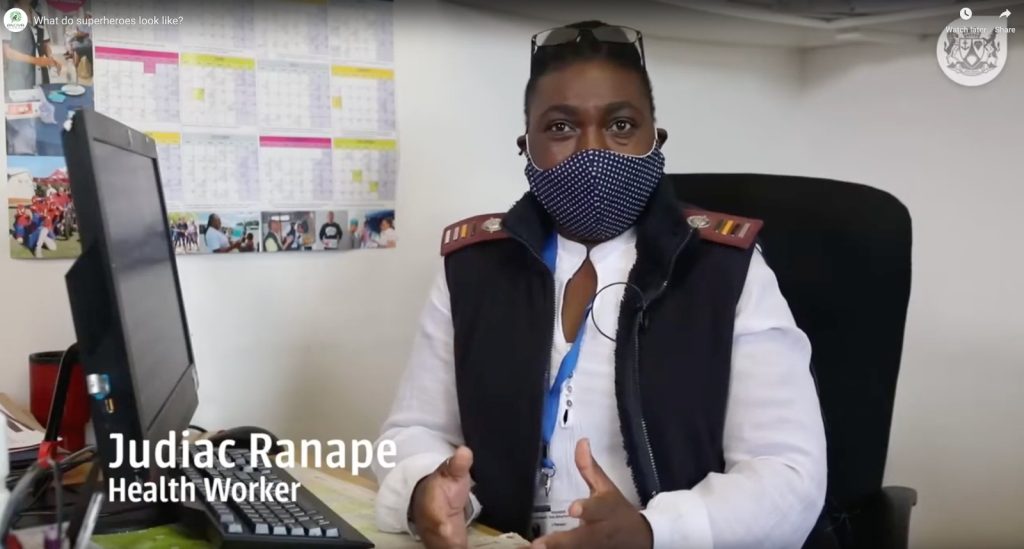
What do SUPERHEROES look like?

[su_youtube_advanced url=\”https://youtu.be/DU_bi9GhmJ0\” playlist=\”\” width=\”800\” height=\”400\” responsive=\”yes\” controls=\”yes\” autohide=\”alt\” autoplay=\”no\” mute=\”no\” loop=\”no\” rel=\”no\” fs=\”yes\” modestbranding=\”no\” theme=\”dark\” wmode=\”\” playsinline=\”no\” title=\”\” class=\”\”] A wonderful tribute to all our SUPERHEROES working on the frontlines of this pandemic. Star appearance by our very own Daleen Carolissen in Cape Town! WE THANK YOU ALL!

What do SUPERHEROES look like? Read More »

18-year-old woman confronts substance abuse through USAID/PEPFAR HIV program, The ELMA Foundation and CBO collaboration

Refilwe from Orlando, Soweto, presented with a high HIV viral load in January 2020 during her visit at Orlando clinic. An HIV viral load is the amount of HIV measured in a volume of blood. Refilwe had a history of interrupting her Antiretroviral treatment (ART) treatment and missing her clinic appointments. Given that the goal of HIV treatment is to lower viral load to be undetectable, this was not ideal. In March, Refilwe was enrolled for case management by an ANOVA\\APACE Retention Counsellor for adherence counselling and also referred to the Anova Social Auxiliary Worker, supported through The ELMA Foundation (which supports community-based organizations that serve marginalized and vulnerable children), for further psychosocial support services. During her counselling session, Refilwe shared that her reasons for non-adherence to her treatment were because of social problems, including substance abuse (dagga) and anger towards her mother, because she was perinatally infected with HIV. She felt unloved and that she was being treated differently from her two younger siblings. Not only that, but Refilwe also has struggles regarding her education: “I am in grade 10, I am the oldest in my class, and I struggle to keep up with my school-work.” She also shared that the relational conflict she faces with her family and her HIV status are some of the main reasons why she has resorted to using dagga as a means to cope. ANOVA\\APACE recruited the young lady into the Department of Health Orlando Clinic Youth Care Club (facilitated in collaboration with the Clinical Nurse Practitioners at the facility). The youth care club focusses on improving retention in care and virologic suppression of HIV positive youth. Additionally, Refilwe was referred to Ikageng, a community-based organisation which rolls out several programmes and interventions at personal, family, community and civic levels. At Ikageng Refilwe was enrolled into the Preventing HIV Amongst Vulnerable Populations Program, which is supported by HIVSA through funding from USAID. Ikageng conducted a home visit for a family interview and Refilwe also joined their drug rehabilitation program. Refilwe’s mother was supported with the relevant services including a food parcel during the COVID-19 level 5 lockdown, and supportive counselling. “I never thought I was worthy of being listened to.” Said Refilwe in reference to the assistance she received from the ANOVA\\APACE and ELMA Foundation programs and Ikageng. “I feel supported, understood, and not judged. I am so happy that the Social Worker from Ikageng also came to our home to help my mother and I to communicate better and listen to each other.” Concludes Refilwe. Refilwe’s mother (Eunice) mentioned that she has seen an improvement in Refilwe and their relationship: “we still have some work to do but at least she trusts me enough to talk to me these days.” Said Eunice. Refilwe and her mother are still receiving ongoing therapy and during her most recent clinic visit in June 2020 her viral load had reduced significantly. With support from PEPFAR, through the US Agency for International Development (USAID), the ANOVA\\APACE activity aims to control the HIV epidemic in Gauteng, Limpopo, and Western Cape. ANOVA\\APACE works with the Department of Health (DoH) to increase the number and retention of PLHIV who are on treatment and increase the proportion of PLHIV who are virally suppressed. Going forward this partnership between USAID and DoH as well as collaborations with community organisations and civil society can help to prevent new HIV infections and reduce HIV morbidity and mortality. Some names and identifying details have been changed to protect the privacy of individuals. Anova/APACE Program The Anova Health Institute was awarded a PEPFAR grant in 2018 through USAID’s APACE activity (Accelerating Program Achievements to Control the Epidemic). ANOVA\\APACE is aligned with PEPFAR’s aim to support South Africa’s National Strategic Plan for HIV and TB and the UNAIDS 90-90-90 goals to end AIDS. The ANOVA\\APACE Program aims to accelerate and sustain epidemic control in the target districts through a data-driven, people-centred and evidence-informed approach.  

18-year-old woman confronts substance abuse through USAID/PEPFAR HIV program, The ELMA Foundation and CBO collaboration Read More »

WITS’ students help 13 USAID/PEPFAR supported clinics to prepare for spike in COVID-19 cases

In March 2020, the Anova Health Institute Accelerating Program Achievements to Control the Epidemic (ANOVA\\APACE) program in City of Johannesburg, approached the University of the Witwatersrand (WITS) with the view to enrol medical students in a COVID-19 disaster management volunteer initiative. The aim of the initiative was to provide Masters and PHD students from the WITS medical faculty and Anova interns an opportunity to acquire first-hand experience of managing an epidemic at health facility level. They were also tasked with assisting various clinics to prepare for the expected spike in Coronavirus (COVID-19) cases. A total of 10 students responded to the call and provided to volunteer at 13 clinics over a period of 2 months. At program commencement, the students were provided comprehensive training on COVID-19. The training was to teach them about the virus, as well as prevention and protection measures. Once they were well orientated, they assisted the clinics to manage the flow of patients and step into the role of foot soldiers, as well as close and capture filing gaps. During the second week, they started with the action deliverables of COVID-19 preparedness which entailed painting zones, setting up seating areas, and stationing sanitizers at key traffic points. “I have to say it\’s been a fun and educational journey and thank you for giving me the opportunity to help health facilities maintain and reduce the spread of COVID-19. It really makes me feel proud to know that I am playing a part in helping the communities and health workers during this outbreak.” Said Mosa Tladi, WITS student volunteer. Training on disaster preparedness is critical for medical students. According to Dr Wayne Smith, Head of Disaster Medicine and Special Events at the Western Cape Department of Health: “The management of the medical effects of major incidents and disasters is one of the most difficult tasks to be performed by medical practitioners. The incidents of such events are increasing worldwide, and medical staff are often at the forefront of dealing with the effects.” Concludes Dr Smith. The students were encouraged to contribute and support clinic staff at a professional level too. They participated in ‘clinic rounds’ with the facility managers and learnt how facilities were grouped into clusters and the effort required to coordinate teams daily. In addition, the support the students provided was critical as clinics which were overwhelmed by the reorganizing and preparation that they were undergoing in order to adequately respond to COVID-19 infections. With support from PEPFAR, through the US Agency for International Development (USAID), the ANOVA\\APACE activity aims to control the HIV epidemic in Gauteng, Limpopo, and Western Cape. ANOVA\\APACE works with the Department of Health (DoH) to provide technical assistance that enhances capacity in the HIV and TB continuum of care and the strengthening of the health system. Although not the focus of the ANOVA\\APACE program, the program’s involvement in the response to COVID-19 is critical. Also, HIV and COVID-19 are integrally related as people with pre-existing conditions appear to be more vulnerable to becoming severely ill with the virus. “I am thankful for the opportunity to familiarize myself with the South African health system. From the discussions and conversations, I could sense the unquestionable willingness to be part of Anova, an organization that strives towards improving implementation processes and practices, which seem to be the major barrier towards achieving optimal health outcomes.” Said Jane Scotch, WITS student volunteer. ANOVA \\APACE saw great value in investing in this initiative in order to empower future generations to better prepare for and manage disasters, with a view to assist the health system to become more agile. “The contribution of the students towards the COVID-19 preparedness was a great act of solidarity, especially since Mandela Day is around the corner. The students have shown a huge amount of dedication and we want to celebrate them for their efforts and the example they have set for others.”  Said Dr Bongile Mabilane, Cluster Programme Manager Anova Health Institute. Anova/APACE Program The Anova Health Institute was awarded a PEPFAR grant in 2018 through USAID’s APACE activity (Accelerating Program Achievements to Control the Epidemic). ANOVA\\APACE is aligned with PEPFAR’s aim to support South Africa’s National Strategic Plan for HIV and TB and the UNAIDS 90-90-90 goals to end AIDS. The ANOVA\\APACE Program aims to accelerate and sustain epidemic control in the target districts through a data-driven, people-centred and evidence-informed approach.  

WITS’ students help 13 USAID/PEPFAR supported clinics to prepare for spike in COVID-19 cases Read More »

5-year-old returns to care with support from USAID/PEPFAR and Department of Social Development

After the death of her mother, Ndivuwo who is 5 years old and her two siblings have been staying with their Grandparents residing in Giyani. The family stays quite a distance away from the nearest clinic and, due to financial constraints, were unable to travel to the health facility for regular check-ups for 20 months. As a result, Ndivuwo’s health deteriorated because she had no access to the treatment she required. Ndivuwo was diagnosed with HIV in September of 2014. In March 2019, Anova Health Institute Accelerating Program Achievements to Control the Epidemic (ANOVA/APACE) program health workers saw the family at Makhuva clinic. The health workers found that Ndivuwo’s situation had worsened since her last clinic visit in July 2017. She had developed septic sores all over her head, and her viral load was not suppressed.  Her siblings also required medical attention as they had developed sores all over their bodies too. The Anova health workers assisted Ndivuwo and her siblings to get the required medical attention and the appropriate medication. Anova health workers also visited their home, with a view to further understand their situation and assist with the appropriate interventions. They discovered that Ndivuwo and her family are facing even more challenges. The grandparents are unemployed, very poor and do not have money for necessities such as food, clothes, and transport. Their house was also in a dilapidated state. Anova contacted the Department of Social Development and the Mayor of Greater Giyani, Cllr Basani Agnes Shibambu to intervene. Anova Health staff at the Giyani subdistrict office were so moved by the situation and donated personal funds towards groceries and the installation of a door for the family home. Ndivuwo and her sibling’s health conditions have greatly improved since Anova’s intervention. The sceptic sores that had developed on her head have healed as a result of her getting access to the medication she required. “Thank you for helping me. I felt good about what Anova did. The assistance with the children’s medical issues was good and when the sores come back, we can keep going back for further assistance.” Said Ndivuwo’s grandmother. The Department of Social Development and the Mayor has also since intervened and have visited Ndivuwo and her family. They are currently exploring the options for better living conditions for the family and have assisted with food parcels, school uniforms and counselling. With support from PEPFAR, through the US Agency for International Development (USAID), the ANOVA\\APACE activity aims to control the HIV epidemic in Gauteng, Limpopo, and Western Cape. ANOVA\\APACE works with the Department of Health (DoH) to provide technical assistance that enhances capacity in the HIV and TB continuum of care and the strengthening of the health systems. Through this work, Anova has also developed a partnership with the Department of Social Development (DSD) in order to jointly tackle the issues of poverty and poor health which are intrinsically linked. “The Department of Social Development in Mopani has a good relationship with Anova. We work together to assist vulnerable people in the communities.” Said Yvonne Chauke, District Social Worker from the DSD. ANOVA\\APACE will continue to collaborate, where possible, with DSD to assist vulnerable and underserved communities. These communities are often deprived of the information, finances or access to the health services they need for the prevention and treatment of diseases. Going forward, this partnership is a major link towards strengthening the health systems of South Africa. Some names and identifying details have been changed to protect the privacy of individuals.

5-year-old returns to care with support from USAID/PEPFAR and Department of Social Development Read More »

Keep your kids safe as they return to school

Minister of Basic Education Angie Motshekga recently announced that schools will be opening for grade 7 and 12 learners as of 1 June 2020. South Africa has seen a jump in numbers in the past few weeks, at the time this article was published, SA’s numbers were sitting at just over 19 000 with infected cases. Our country does however have one of the lowest death rates. While many parents agree and can\’t wait for school to open fully, others are saying that it\’s too risky to return to school soon. But the minister has assured parents that necessary precautions will take place in schools to ensure the safety of students. “It is managed by people that are trained, they screen, they check the temperature. We have linked every school to a clinic, if you find a child with a high temperature, we will handle it the way it is handled everywhere else. We have community health workers who will be screening at the gate.” Said Motshekga at a press conference when asked about how schools would screen their students for any potential COVID-19 symptoms “There are three principles guiding us – making sure that schools don’t become centres where the virus can be spread, making sure children don’t get infected in schools but also enabling them to continue with what is rightfully theirs, the right to education and the right to be taken care of.” Concluded the minister. As a parent, there’s not much you can do at making sure your child adheres to the school rules while at school, but here are some measures (provided by https://www.cdc.gov/) you can take to help protect your kids while at home. Clean hands often using soap and water or alcohol-based hand sanitizer. Children 2 years and older should wear a cloth face covering over their nose and mouth when in public settings where it’s difficult to practice social distancing. Clean and disinfect high-touch surfaces daily in household common areas (like tables, hard-backed chairs, doorknobs, light switches, remotes, handles, desks, toilets, and sinks). Limit time with other children outside school. If children meet in groups, it can put everyone at risk. Children can pass this virus onto others who may be at higher risk. Practice social distancing. The key to slowing the spread of COVID-19 is to limit contact as much as possible. While school is out, children should not have in-person playdates with children from other households. If children are playing outside their own homes, it is essential that they remain 6 feet from anyone who is not in their own household. Visit https://www.cdc.gov/ for more updates and tips.

Keep your kids safe as they return to school Read More »

Coronavirus outbreak – a national state of disaster

As the World Health Organization has declared the CORONAVIRUS outbreak as a global pandemic, the South African Presidency has also declared a national state of disaster in terms of the Disaster Management Act.  Following an extensive analysis of the progression of the disease worldwide and in South Africa, Cabinet has decided to take urgent and drastic measures to manage the disease, protect South African’s and reduce the impact of the virus within our society and the economy.  Please use the link below to read the latest message from the desk of the Presidency. From the desk of the President: Coronavirus Pandemic

Coronavirus outbreak – a national state of disaster Read More »

CORONAVIRUS – SOUTH AFRICA IS ON HIGH ALERT

As we have been made aware about the deadly coronavirus outbreak in China, the South African Department of Health has assured the public that it’s adequately prepared for active surveillance, early detection, isolation and case management, contact tracing and prevention of onward spread of Coronavirus infection. According to World Health Organization (WHO), the incubation period is about 2 – 10 days though some literature has cited up to 14 days. More evidence is needed to determine if asymptomatic patients are contagious, although the preliminary evidence suggests that, like SARS and Ebola, all the contacts reported were patients who had symptoms. Typically, patients present with flu like symptoms and a cough.  The disease can be complicated by shortness of breath, multi-organ failure and eventually death.  Most fatalities reported have been elderly people or persons with pre-existing co-morbidities, suggesting that this is the population group that is most at risk. South Africa has responded rapidly to ensure that the Coronavirus does not become a national threat.  It is standard procedure for the Department of Health to monitor emergent outbreaks and they are currently tracking a plethora of pathogens including those viruses of pandemic potential like H5N1. In regard to Coronavirus, due to the rapidly evolving situation in China, the Multi-sectoral National Outbreak Response Team (MNORT) was reconvened on 24 January 2020.  MNORT comprises the WHO, National Departments such as Home Affairs, Agriculture, International Relations, Tourism and representatives of Private Health sector. The current activities already undertaken by the National Department of Health and National Institute of Communicable Diseases (NICD) include: An alert that was developed and disseminated to all provinces and stakeholders. MNORT and provincial outbreak response teams have been activated. Press releases have been circulated and various officials from departments of Health and International Relations have been interacting with the media and the public. A hotline has been set up: 080 002 9999 In addition, below is a list of designated hospitals to prepared to manage Coronavirus cases: Province Designated Hospital Designated Referral Hospital Limpopo Polokwane Hospital Mpumalanga Rob Ferreira Hospital Gauteng Charlotte Maxeke Hospital Steve Bhiko Hospital Thembisa Hospital Charlotte Maxeke Hospital Kwazulu-Natal Greys Hospital Northwest Klerksdorp Hospital Free State Pelonomi Hospital Northern Cape Kimberley Hospital Eastern Cape Livingston Hospital Western Cape Tygerberg Hospital Tygerberg Hospital Basic principles to reduce the general risk of transmission of acute respiratory infections, which include the following: Avoid close contact with people suffering from acute respiratory infections. Frequent handwashing, especially after direct contact with ill people or their environment. Avoiding unprotected contact with farm or wild animals if travelling to China When sneezing or coughing it is better to cover your nose and mouth with a tissue or arm and not your hands. South Africa has no reported or suspected cases to date.

CORONAVIRUS – SOUTH AFRICA IS ON HIGH ALERT Read More »