Anova Health Institute

admin_Anova

“We want our patients to know that they can restart treatment and come back to care anytime.” Dr Diana Mokoena

17 September marks World Patient Safety Day, a day to raise global awareness on the issues that patients come across. The biggest issue in the past 18 months, has been the lack of access to the clinics because of the pandemic. Earlier this year, Anova Health Institute launched an aggressive campaign to welcome patients back to care. Amanda Ndlangisa speaks to Dr Diana Mokoena, APACE/Johannesburg Programme Manager about the Welcome Back Campaign. Please tell us about the Welcome Back campaign. We noted that many of our patients had been disrupted from collecting their ARVs and other chronic medications as a result of the pandemic and associated lockdown restrictions. People were scared of coming to clinics initially because they were worried about catching Corona virus; some were unsure if they could return after being off their treatment. We wanted our patients to know that they can restart and come back to care after interrupting their treatment; that we won’t judge them or punish them for interrupting treatment; that we wanted to support them to get back on track and take control of their health. We have used radio as the main medium for spreading the message far and wide. Our community outreach teams also use posters, banners and leaflets when they’re out to spread the message. We also have posters, leaflets and staff t-shirts, masks and caps with the same message so that people in and outside of facilities can see and hear the message Why did you decide to do this campaign? The Covid pandemic disrupted so much of our lives, so much was unknown about this disease initially and there was a lot that felt like it was out of our control and chaotic. We thought a fresh start would be good for the year 2021, we saw it as an opportunity to empower our patients and communities to take back control of their own health and restart a journey to good health on their own terms. Why the name “Welcome Back”? It’s warm and non-judgmental, it’s inviting. It encompasses our intentions and our message of hope perfectly. How is the campaign going so far?  Quite well, the radio adverts and interviews have been well received. Many patients have reached out to us on WhatsApp and other mediums after hearing the radio messages for assistance with getting back onto care What are the future plans for the campaign? There is a need to continue the radio campaigns for a few more months, thereafter we need to explore how we can use our social media channels to spread the message as well as existing community-based platforms to engage with our patients and communities closer.   We understand that going to your clinic might be scary for you but we’re here to remind you that we have created welcoming spaces in our facilities to welcome you back to care, and our clinics are safe. If you have stopped going to the clinic to screen, test or get your medication, we would like to invite you back to care.  Visit your local clinic to get back on treatment. #WorldPatientSafetyDay

“We want our patients to know that they can restart treatment and come back to care anytime.” Dr Diana Mokoena Read More »

Testing for HIV? Don’t leave children and teenagers behind this Child Health Month

August marks Child Health Month, and our focus this year is testing children and teenagers for HIV. Amanda Ndlangisa sat down with Dr Melanie Collins, Technical Advisor: Paediatrics and Adolescents at Anova Health Institute, who highlights the importance of people knowing their HIV status, especially children.

Testing for HIV? Don’t leave children and teenagers behind this Child Health Month Read More »

United States, Western Cape Department of Health provide convenient “Collect & Go” e-lockers for chronic medication collection

The U.S. government, through the President\’s Emergency Plan for AIDS Relief (PEPFAR) and implemented by USAID, and the Western Cape Department of Health are giving patients a safer, more convenient option for medication collection by installing “Collect & Go” e-lockers at health facilities across the Western Cape. 

United States, Western Cape Department of Health provide convenient “Collect & Go” e-lockers for chronic medication collection Read More »

All about the PWID JabSmart program

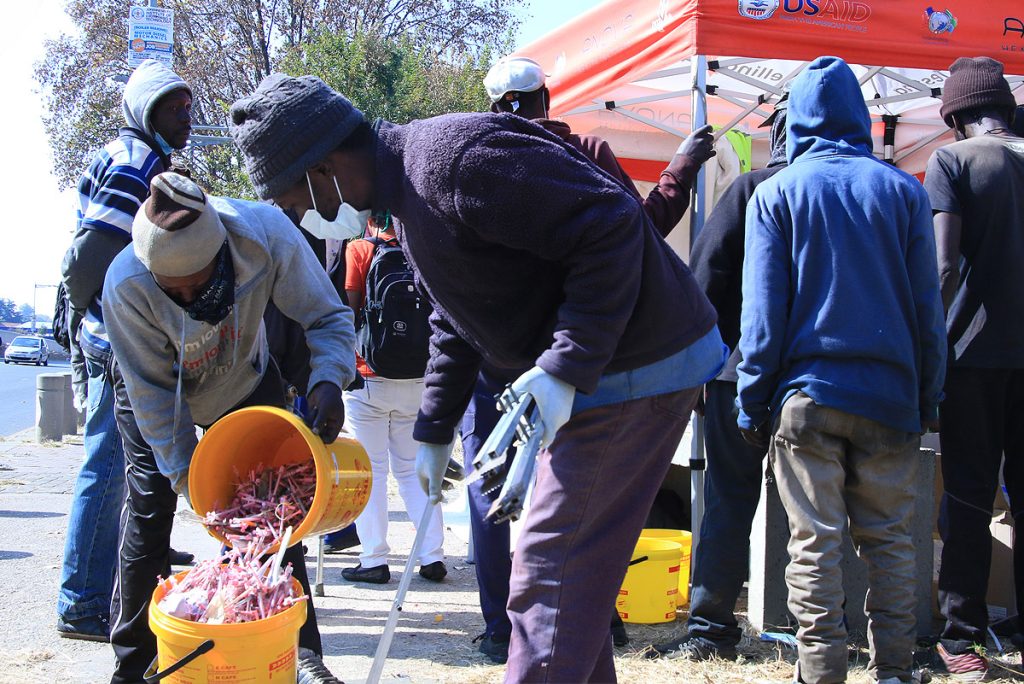
Nkosinathi Zuma, Project Manager at Anova Health Institute, gives more insight on what the program is about, what it has achieved so far and the program\’s future plans. What is Anova Health Institute role in this program? Anova provides specialized healthcare services for PWIDs in the Johannesburg Health District and Sedibeng District. Anova collaborates with community-based organizations (CBOs), non-government (NGOs), government and municipal departments to facilitate direct delivery of healthcare, other social services and advocacy for PWIDs. The JabSmart program is implemented within the framework of the National Strategic Plan (NSP) for HIV, TB and STIs: 2017 – 2022. The program is supported by the National Department of Health (NDoH) and the South African National Aids Council (SANAC). This program is funded by the Global Fund (GF) to fight HIV-AIDS, Tuberculosis, Hepatitis, and STI. The principal recipient of the grant from the GF is The Networking HIV and AIDS Community of South Africa (NACOSA), while Anova Health Institute is the implementing agency. What are the objectives of the JabSmart program? Prevent new infections of HIV and TB amongst people who inject and use drugs. Reduce human rights, social and structural barriers to HIV, Hepatitis and TB prevention, care and impact among PWID. Strengthen the advocacy and national commitment for PWID programming in South Africa. Provide psychosocial interventions to PWID’s. Provide opioid substitution therapy (OST) to persons who inject drugs. Improve the 90- 90- 90 health outcomes for PWID by using combination prevention approaches. Empower and support woman who use drugs through group therapy. Who benefits from this program? People who inject drugs are the main beneficiaries of this program. Families of PWIDs benefit from the program through family reunification and psychosocial support provided by our team of social workers, social auxiliary workers, and psychosocial counselor. Peer educators, who are former injectors, are employed by the program. They have access to Opioid Substitution (OST) Therapy and other clinical services provided by a medical doctor and professional nurses at the Yeoville Clinic. They also have access to psychosocial support.  What are some of the challenges you face with this program and how do you overcome them? Acceptance of needles and syringes program remains a challenge in communities as it is perceived as promoting drug use. We are currently engaged on community dialogues and sensitization trainings to share information about the importance of distributing needles and syringes to PWIDs. For instance, the distribution of needles and syringes reduces the following: the likelihood of users of heroin and other drugs sharing the syringes and using them more than once; transmission of HIV, hepatitis B and C; skin trauma; and other blood-borne viruses. Confiscation of needles and syringes by the police remains a challenge in some communities. For instance, some PWIDs have been arrested by the police for being in possession of needles and syringes. Stigma and discrimination towards the PWID population is very high. They are commonly labeled as troublesome people who commit crimes in communities, and as a result at times they are normally victims of community mob justice. Some health facilities do not want to provide healthcare services to PWIDs which causes a huge barrier to client’s access to treatment, including ART. To overcome these challenges, we do community dialogues and sensitization trainings to inform the communities about the PWID population. In these trainings we provide information about the importance of distributing the needles and syringes to the PWID population. We respect the concerns raised by the communities about the dangers of needles discarded by PWIDs in public spaces. We ensure PWIDs are aware of the importance of disposing off needles safely through inter alia: We educate our clients about appropriate disposal of used needles. We provide black sharp container during outreach to every client receiving harm reduction packs. Project staff do daily needle pickups during their outreach. During daily outreach, clients return used needles and get fresh needles. We also implement community clean up initiative involving stakeholders such as community gatekeepers, the general public, and the PWID clients in picking up inappropriately disposed needles. We also do one-on-one engagement with the police to share information about the PWID program and how the program benefits the PWID communities. What are some of your proudest moments that the program has been involved in? Some of our clients have been reintegrated back into their families. After raising awareness on drug injection, some families are assisting relatives injecting drugs and living with HIV to adhere to OST and ART treatment. The program provides great empowerment to the PWID communities as it provides high-quality services to a neglected population. The following are the services provided: HIV testing services, mobile van ART initiations, linkage of HIV positive PWID to care, dignity packs for women, male and female condoms, screening for TB, STI, Hepatitis B and C, Opioid substitution therapy (OST), mental health support, peer education, advocacy for human rights violations, and building referral linkages and networking for the PWID community. The program has recruited about 30 peer educators who were unemployed and had less chance of finding employment anywhere. We have managed to establish and drive a women-focused component of the program encompassing weekly female contemplated groups that deal with issues affecting female PWIDs. This has given this group of women a platform for group discussions on their life challenges and how to overcome these challenges. This also gives them access for psychosocial support from our well-trained team of Social workers, Psychosocial Counsellor, and Social Auxiliary Workers. The program provides these females with dignity packs (sanitary pads, toothpaste, toothbrushes, bath soap, face masks) and COVID-19 packs (sanitizer, face masks, soap). What has the PWID program achieved since it started? Since the start of the program in April 2019 we are providing services to about 12913 PWIDs. 4161 clients have received HIV testing services and about 500 clients have been initiated on Antiretroviral therapy (ART). 219 clients have been successfully put on OST. OST improves the physical and psychological health and wellbeing of PWIDs, specifically heroin users. It minimises

All about the PWID JabSmart program Read More »

Celebrating International Nurses’ Day with Anova Health Institute Nurses

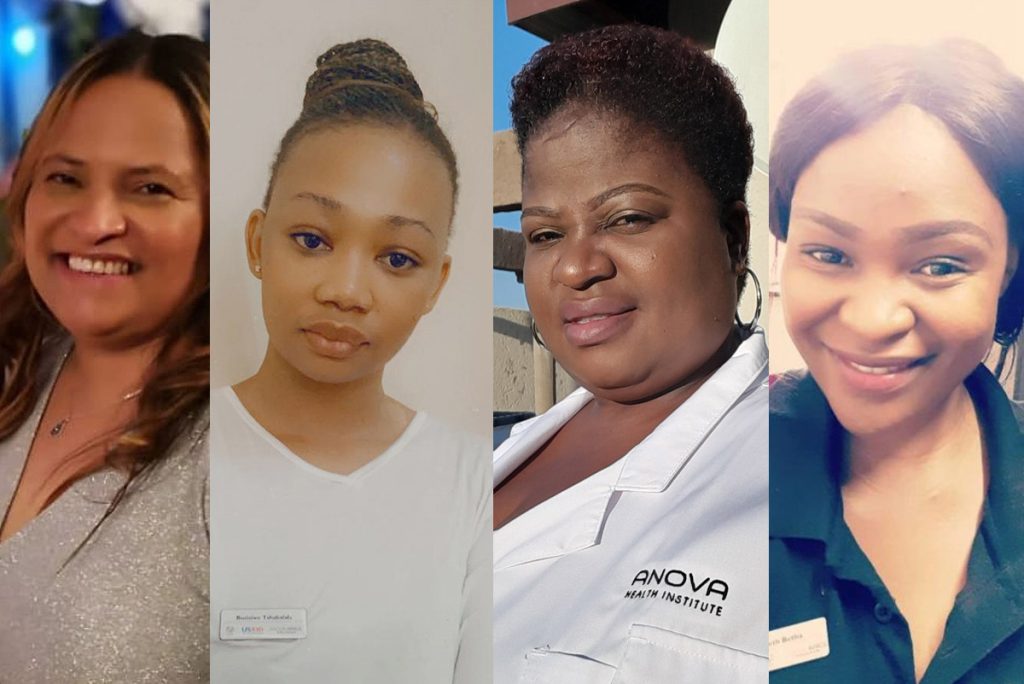
International Nurses\’ Day takes place each year on the 12th of May to mark the anniversary of Florence Nightingale’s birth and to celebrate the nursing profession. In the peak of the Covid-19 pandemic, nurses all over the world were in the frontline and are still continuing to save our communities. As we celebrate this year’s International Nurses’ day, Anova Health Institute honours all our nurses and what they continue to do. In commemorating this special day, we journey with our nurses who highlight the significance of their profession during this pandemic, being a voice to lead and a visionary for future healthcare. Daleen Wilhelmina Carolissen, Western Cape, who started her career in Poly Clinic at Tygerberg Hospital in 1993, says she’s wanted to be a nurse since she was 17. Daleen has been with Anova Health for 16 months now. This is her journey. When did you know you wanted to be a nurse? At the tender age of 17, I accompanied my Grandma to hospital where I firsthand witnessed the compassion and care from Nurses. Please tell us about your role at Anova. I am currently employed as an Area Manager at Anova APACE Western Cape for the Northern District, where I am managing teams in collaboration with other line managers to enable them to provide Health System Strengthening and Quality improvement to the Department of Health. I am responsible for program reports to the Cluster Manager, I am also responsible to develop and plan strategies to achieve the 95-95-95 in HIV/TB in our Sub-district. I provide Clinical training and advice to Clinicians in the HIV/TB field and support the implementation of new projects like PREP to the Sub-district. What do you love most about being a nurse? I know that through my career I can influence change, and changing people’s lives for the better is the best reward, even if it’s only by providing the highest standard of care and respect to our patients that makes me happy. Many life skills I have learnt through my career is to listen, how to communicate, when to lead, when to follow, when to be patient. The list is endless. How have you managed to navigate working through a pandemic? Gaining as much knowledge as I could about COVID – 19 and even providing training to others about the pandemic and how to deal with it helped a lot. Because of my adaptable nature, adjusting to the new normal was not disruptive to me. The challenge was to influence others to follow suit. What does International Nurses’ Day mean to you? Personally, it is the one day in the year specially set aside for me to celebrate my colleagues across the universe, but especially those close to me. It also is an opportunity for those who we, as Nurses so passionately care for; to pause and just celebrate with us. What advice would you give someone who would like to follow your career path?  Becoming a Nurse have to be for the right reason which is to pledge yourself to the service of humanity as we so proudly say. It is not an easy path, like all other careers it has its ups and downs, not all patients are appreciative or respectful-how you react to that is a choice- make the right one. Mafoko Rachel Sesana, Capricorn, was only eight –  years old when she knew she wanted to be a nurse. Mafoko is a clinical nurse mentor and has been with Anova Health for five years. This is her journey. When did you know you wanted to be a nurse? When I was 8 years old and in primary school, I was cast in a school play as a nurse and my mom went to a jumble sale to buy me a little white overall that I wore to the play and I remember feeling so clean and so proud of being a nurse What and where was your first nursing job? I went to the then Gazankulu College of Nursing and started as a student nurse and went to Nkhensani Hospital for practicals and worked for the first time as a professional nurse at Msengi Clinic. Please tell us about your role at Anova. I am working as a clinical nurse mentor, I am responsible for tele mentoring, on site mentoring and giving technical advice on matters related to HIV, TB and now COVID – 19. I also do file audits and sometimes direct service delivery through seeing of clients where possible and in-service trainings for staff when necessary. What do you love most about being a nurse? You get to work with people who come to you with a certain challenge or sickness not knowing how to help themselves but when they leave your consultation they are way better than they were when they arrive emotionally, physically and spiritually. You’re actually working with God to help His people. How have you managed to navigate working through a pandemic? Working as a team helps, the support of the company the provision of PPE and continuing with the updating on the new development on the virus. What does International Nurses’ Day mean to you? It means a day where at least nurses get credit for being heroes and heroines, and a day where we get to look at the masses of nurses and thank God that we are not doing this alone, but we have each other. What advice would you give someone who would like to follow your career path? They should be passionate and love people and know that in dealing with a person’s life there are no second takes, so they should be sure of what they are doing. Busisiwe Tshabalala, COJ, was inspired to be a nurse by her grandmother. Busisiwe has been with Anova Health for two years, she is a Professional Nurse at Zola Community Health Clinic. This is her journey. When did you know you wanted to be a nurse? I think

Celebrating International Nurses’ Day with Anova Health Institute Nurses Read More »

“The process was both amazing and unbelievable.” Susan Kekana talks about her experience with the COVID–19 vaccine.

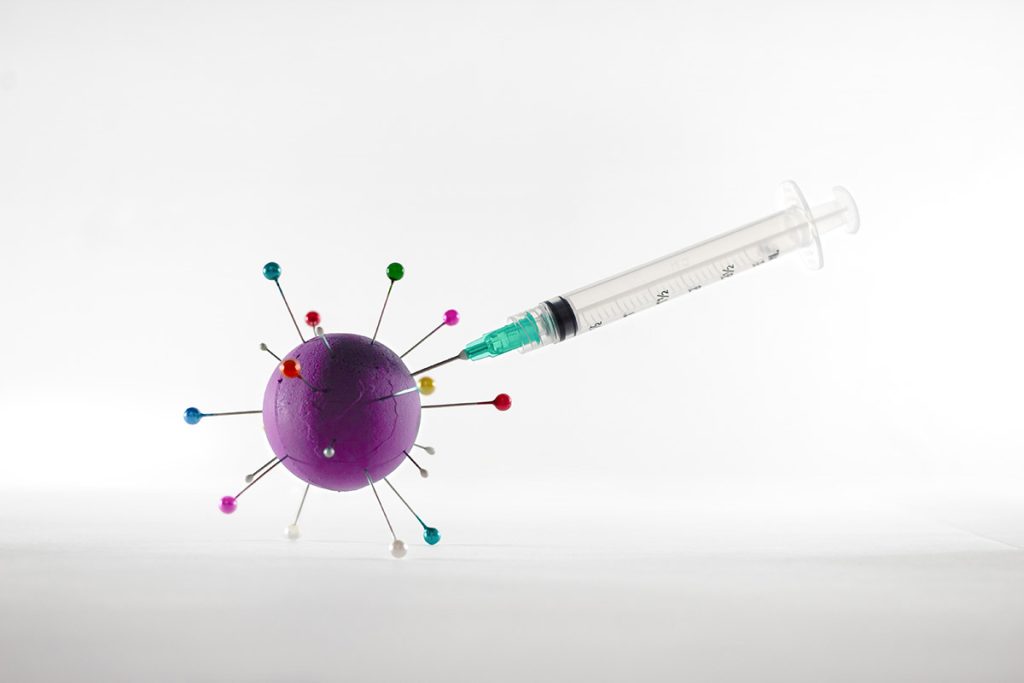
COVID-19 has taken the world by storm and changed everyone’s life but with the new vaccine being rolled out, there seems to be a light at the end of the tunnel. Amanda Ndlangisa recently spoke to Anova Health Institute’s Susan Kekana, Executive Director Government Relations, who recently got vaccinated. Kekana shares her experience. How did the COVID-19 pandemic affect you? The pandemic has affected me in more ways that I can imagine. I have lost people I am close with, family members, friends, and colleagues. Then there’s the economic side of things that I think we all felt, the economy went down, people lost their jobs which contributes to the high rate of poverty in the country. The pandemic also affected me spiritually and socially. Not being able to go to church, visit friends and family, the change of lifestyle, social distancing, wearing masks. Things we weren’t accustomed to are now the norm. It’s been a bit of a challenge to adjust to the changes and work policies, working from home for one has been difficult. Were you looking forward to the vaccine?   Looking forward is an understatement. I have been waiting desperately for it. I couldn’t wait for our front line colleagues to be vaccinated, including teachers/police/ the elderly who are vulnerable and need the vaccine the most. When you found out about the vaccine, what was the first thing that came to mind? Excitement. I couldn’t really believe it. Please walk us through the day you got vaccinated. The process was both amazing and unbelievable. To have been able to get something I have been long waiting for so quickly was something else. The process took about one and a half hours. I felt relieved after getting the jab. Is getting vaccinated painful? Not at all. It feels like how it would when you get a normal injection/needle prick. Have you experienced any side-effects? I got a mild fever at night post vaccine, something I was expecting because they did explain the side effects to me, but I was on my feet working the following day. I also had a small pain and redness on the injection site, which  is also normal and expected because of the needle prick. What would you tell someone who wants to get vaccinated but isn’t sure because of all the conspiracy theories?  I would educate him/her on the benefits of vaccinations and also about prevention measures, like wearing of  masks, social distancing etc. I would definitely encourage him/her to read Covid 19 IEC materials, to get proper information from experts, including Nurses/Drs in health facilities, and to ask questions where he/she doesn’t understand.  I would also give them  the example of how we all  got immunised during childhood to prevent diseases, and because of that we don’t see people dying of polio or smallpox. Although Covid 19 is something new, vaccination has been around for many years , to prevent severe complications of many infections, including Covid 19.

“The process was both amazing and unbelievable.” Susan Kekana talks about her experience with the COVID–19 vaccine. Read More »

Anova Announces CEO Retirement and Succession Plan

The Board of Directors of the Anova Health Institute NPC is pleased to announce the appointment of Dr Helen Struthers as Joint Chief Executive Officer of Anova with effect from April 2021. Dr Struthers, who will join Prof James McIntyre as Joint CEO, has many years’ experience in leading large grant-funded public health and research programmes in South Africa and is one of the founding members of Anova. Prof McIntyre will be stepping down from the Anova CEO position at the end of 2021, on reaching retirement age. He will, however, continue his involvement with Anova as a Senior Advisor on technical issues and remains committed to the success of the organisation. The Board also welcomes the appointment of Dr Moyahabo Mabitsi as Chief of Party of the PEPFAR/USAID funded APACE grant. This is one of the largest and most complex PEPFAR programmes in the world, and Dr Mabitsi will lead a dedicated team of experienced programme and technical specialists. Both Dr Struthers and Prof McIntyre will continue to provide technical and management expertise to all Anova’s activities, including the APACE programme. Board Chair, Ms René Kenosi said… James McIntyre and Helen Struthers founded Anova in 2009 and have grown the organisation into one of the largest and most successful Health NGOs in Africa. As the founding CEO, Prof McIntyre has successfully provided strategic leadership within the organisation, and has provided guidance to the Department of Health and the first Health Minister’s Advisory Committee for COVID-19. Internationally he has led IMPAACT, a global paediatric HIV research network and worked on numerous committees and Boards, including with the WHO and UNITAID. We are especially pleased that Prof McIntyre has agreed to remain available for consultation to Anova, going-forward. This announcement is the successful pinnacle of a multiyear succession plan which builds on Anova’s strengths and advances our transformation strategy. We have every confidence in Dr Struthers’ ability to lead the organisation and ensure the seamless transition of the CEO role. Dr Mabitsi is a shining example of Anova’s commitment to develop and nurture our internal talent. She has demonstrated her commitment and ability in leading a  range of Anova’s health programmes. Together with Anova’s experienced leadership team and dedicated staff, Dr Mabitsi will continue Anova’s tradition of excellence in programme delivery in the APACE grant as the Chief of Party. Ends For more information, please contact: Sibonisiwe Dube Head of Marketing, Anova Health Institute 060 560 2673 info@anovahealth.co.za www.anovahealth.co.za

Anova Announces CEO Retirement and Succession Plan Read More »

“The vaccine is like any other needle prick” Dr Natasha Davies talks about her experience with the COVID – 19 vaccine

COVID-19 has taken the world by storm and changed everyone’s life. We now all have to adjust to a new normal but with the new vaccine being rolled out, there seems to be a light at the end of the tunnel. We spoke to Anova Health Institute’s HIV Specialist, Dr Natasha Davies, who recently got vaccinated.  Dr Davies shares her experience. As a doctor, your chances of contracting COVID-19 are higher than the average person, how did this make you feel? Initially I was pretty worried and scared, even though I am (relatively) young and healthy. But once I got used to making sure I was in a well ventilated space and had my mask on properly I relaxed a bit and trusted that I was doing what I could to prevent myself from getting infected. Were you looking forward to the vaccine?  Yes. Several of my friends and family members had enrolled in various trials and I had seen that they hadn’t had too bad side effects and I also heard from them that the vaccine outcomes had been promising so I was feeling hopeful. When you found out about the vaccine, what was the first thing that came to mind?  To be honest I started looking forward to being able to go and visit my Mum in the UK again and feeling relieved for my older friends and relatives. Please walk us through the day you got vaccinated. I knew I was one of the first few hundred people in the country to be called in for the vaccine so I was excited and happy, felt a little bit guilty it was me and not others who might be at higher risk, and really felt privileged to have the opportunity. I got a WhatsApp with my session time at Chris Hani Baragwanath Hospital and got there a little early. I was amazed at how well organised and slick the whole process was, like they had been doing it for months not just one day. The process was very straightforward. I presented my voucher number from EVDS and my ID and was checked for symptoms and my temperature. Then I was given a consent form and vaccination card to complete. The preparation part took about 20 minutes. I had to wait a little as there was one group ahead of me. They were vaccinating us in groups of 20. The vaccination itself was fine. Just like any other needle prick. It took less than 5 minutes. Then we had to sit outside in a holding area for 15 minutes to check we had no immediate allergic reaction. Then we were free to go. From start to finish it was a little over an hour. And the atmosphere was so great, people were singing and ululating and clapping as each group left. Such a celebration of being protected. How did you feel immediately after getting vaccinated?  Physically, totally fine, no issues at all. Emotionally, on a bit of a high really, I couldn’t quite believe I now had a vaccine on board that could save me from getting severe COVID. It was a little bit surreal after the recent disappointment of the Astra Zeneca (Oxford) vaccine outcomes with the new strain. Have you experienced any side-effects? So I had my vaccine on Friday morning. By Friday evening my arm was feeling a bit sore, like I had been punched hard enough to bruise. On Saturday I felt a bit tired when I woke up and by Saturday lunch time I was feeling a bit fluish with a slight temperature, headache and achy muscles but it wasn’t bad enough to stop me from getting on with my weekend and I didn’t need to self-medicate. By Sunday I was totally fine again. So really not bad. I just reminded myself that feeling a bit under the weather was a good sign that my immune system was kicking in and the vaccine was taking effect. What are the benefits of getting vaccinated?  The benefits are that you have a far lower chance of getting severe COVID which may require hospitalisation or cause death. Unfortunately they don’t yet know if this vaccine is going to help prevent infection altogether and protect us from mild disease. They also don’t know if it will stop people who are vaccinated transmitting to others. It would be really nice to know these things soon as it is quite hard to be vaccinated and then to accept that I still have to take the same precautions (mask, sanitising, distancing, ventilation) as before – I am finding that aspect a bit frustrating. It would be great if getting the vaccine meant getting back to pre-COVID life too. But I am really relieved not to be at risk of severe disease anymore. What message do you have for the anti-vaxxers?  I know that it’s complicated and some people have genuine concerns. I think, however, that people do need to trust the global scientific expertise that has gone into this effort. I have no concerns that the vaccines were developed too quickly because I understand that the technology was already there and available and the researchers just had to adapt it for COVID. Almost 2.5 million people have died in little over a year. The vaccine offers a chance not to die. To me that seems pretty simple. COVID has taken the lives of people almost at random, no-one can predict who will get mild disease and who will die, so I don’t think it is worth taking the chance. And I certainly don’t hold with any of the farfetched conspiracy theories that some groups are touting. If people are worried about microchips and individuals being tracked via the vaccine then they shouldn’t own a smartphone either. What would you tell someone who wants to get vaccinated but isn’t sure because of all the conspiracy theories?  I would say stick to the information posted on reliable scientific sites and trust the global

“The vaccine is like any other needle prick” Dr Natasha Davies talks about her experience with the COVID – 19 vaccine Read More »